The cost of higher education has been a growing concern for many, and student loans have become a crucial part of financing a college degree. However, navigating the complexities of student loan interest rates can be daunting. Understanding these rates is essential for borrowers to make informed decisions about their education and financial future.
This article explores the current landscape of student loan interest rates, examining their historical trends, impact on borrowers, and strategies for managing debt. We’ll delve into government policies, compare student loans to other forms of debt, and offer insights into the future outlook for interest rates.




By gaining a comprehensive understanding of this topic, borrowers can empower themselves to make informed choices and navigate the path to financial freedom.
Current Student Loan Interest Rates
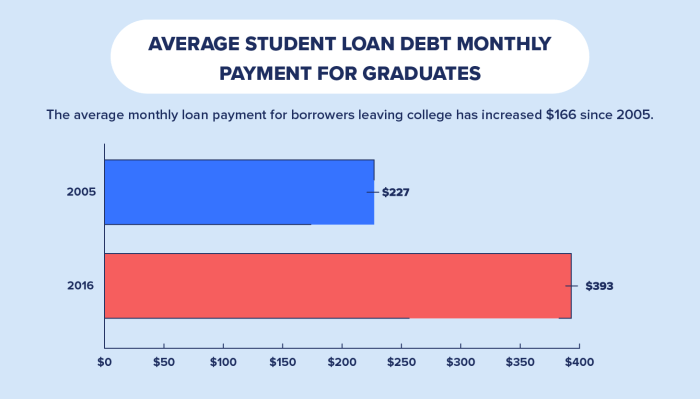
Student loan interest rates can significantly impact the overall cost of your education. Understanding the current interest rates for different types of loans is crucial for making informed financial decisions. This section will discuss the average interest rates for federal and private student loans and provide information on the factors that influence these rates.
Federal Student Loan Interest Rates
Federal student loans offer fixed interest rates, which remain the same throughout the loan’s life. These rates are set annually by the government and vary based on the loan type and the academic year in which the loan was first disbursed.
- Direct Subsidized Loans:These loans are available to undergraduate students who demonstrate financial need. The government pays the interest on subsidized loans while the borrower is in school, during grace periods, and during deferment periods. The interest rate for Direct Subsidized Loans for the 2023-2024 academic year is 4.53%.
- Direct Unsubsidized Loans:These loans are available to both undergraduate and graduate students. Interest starts accruing immediately, and borrowers are responsible for paying the interest while in school, during grace periods, and during deferment periods. The interest rate for Direct Unsubsidized Loans for the 2023-2024 academic year is 4.53%.
- Direct PLUS Loans:These loans are available to graduate students and parents of dependent undergraduate students. The interest rate for Direct PLUS Loans for the 2023-2024 academic year is 7.54%.
Private Student Loan Interest Rates
Private student loans are offered by banks and other private lenders. These loans typically have variable interest rates, which can fluctuate based on market conditions. The interest rate on a private student loan is usually higher than the interest rate on a federal student loan.
- Variable Interest Rates:Variable interest rates can fluctuate based on a benchmark rate, such as the prime rate or the LIBOR. This means that the interest rate on your loan can go up or down over time.
- Fixed Interest Rates:Fixed interest rates remain the same throughout the life of the loan. This can be a good option for borrowers who want to avoid the risk of fluctuating interest rates.
Factors Influencing Student Loan Interest Rates
Several factors influence the interest rate on student loans. These factors can include:
- Credit Score:A higher credit score typically results in a lower interest rate.
- Loan Type:Federal student loans generally have lower interest rates than private student loans.
- Loan Term:A longer loan term may result in a lower monthly payment but a higher overall interest rate.
- Cosigner:Having a cosigner with good credit can help you qualify for a lower interest rate.
- School Type:The type of school you attend can also affect your interest rate.
- Market Conditions:Interest rates can fluctuate based on market conditions, such as inflation and the federal funds rate.
Historical Trends in Student Loan Interest Rates
Student loan interest rates have fluctuated significantly over the past decade, influenced by various economic factors and government policies. Understanding these trends is crucial for borrowers to make informed decisions about their loan repayment strategies.
Interest Rate Changes Over the Past Decade
The past decade has witnessed substantial changes in student loan interest rates. For example, the interest rate on federal subsidized loans for undergraduate students was 3.4% in 2012, while in 2022, it was 4.99%. This increase reflects the overall trend of rising interest rates during this period.
- Federal Direct Subsidized Loans:Interest rates on these loans have generally increased over the past decade, with the exception of a brief period during the Great Recession when rates were lowered to stimulate the economy.
- Federal Direct Unsubsidized Loans:Interest rates on unsubsidized loans have also shown an upward trend, mirroring the changes in subsidized loan rates.
- Federal Direct PLUS Loans:Interest rates on PLUS loans, which are available to graduate students and parents of undergraduate students, have also generally increased, but at a slightly higher rate compared to other federal loan types.
Economic Factors Influencing Interest Rates
Several economic factors play a significant role in shaping student loan interest rates.
- Federal Reserve Interest Rates:The Federal Reserve’s monetary policy decisions, including changes in the federal funds rate, directly impact interest rates across the economy, including student loans.
- Inflation:When inflation rises, lenders tend to increase interest rates to compensate for the decreasing value of their money. This can lead to higher interest rates on student loans.
- Government Policies:Government policies, such as changes in loan programs or subsidies, can also influence interest rates. For instance, the government’s decision to cap interest rates on certain types of student loans can limit the extent of rate increases.
Impact of Economic Factors on Student Loan Interest Rates
Economic fluctuations have a direct impact on student loan interest rates.
Examine how Defaulted student loans can boost performance in your area.
- Recessions:During economic downturns, interest rates tend to decrease as the Federal Reserve attempts to stimulate economic growth. This can lead to lower interest rates on student loans, making them more affordable for borrowers.
- Economic Expansions:During periods of economic expansion, interest rates typically rise as the Federal Reserve aims to control inflation. This can result in higher interest rates on student loans, increasing the cost of borrowing for students.
Strategies for Managing Student Loan Interest Rates
Managing student loan interest rates is crucial for minimizing the overall cost of repayment. There are several strategies borrowers can employ to achieve this goal, from making extra payments to exploring refinancing options.
Refinancing and Consolidating Loans
Refinancing or consolidating student loans can potentially lower interest rates, reducing the overall amount paid over the loan’s lifetime.
- Refinancinginvolves replacing existing loans with a new loan at a potentially lower interest rate. This is typically offered by private lenders and may be beneficial for borrowers with good credit scores and a stable income.
- Consolidationinvolves combining multiple loans into a single loan, potentially simplifying repayment and potentially securing a lower interest rate. This option is usually offered by the federal government and can be advantageous for borrowers with a mix of federal loans.
It’s important to carefully compare interest rates, fees, and loan terms before refinancing or consolidating loans.
Income-Driven Repayment Plans
Income-driven repayment plans are designed to make student loan payments more manageable by basing monthly payments on a borrower’s income and family size.
- Income-Based Repayment (IBR)caps monthly payments at 10% of discretionary income, with loan forgiveness after 20 or 25 years of payments.
- Pay As You Earn (PAYE)caps monthly payments at 10% of discretionary income, with loan forgiveness after 20 years of payments.
- Revised Pay As You Earn (REPAYE)caps monthly payments at 10% of discretionary income, with loan forgiveness after 20 or 25 years of payments.
- Income-Contingent Repayment (ICR)caps monthly payments at a percentage of discretionary income, with loan forgiveness after 25 years of payments.
These plans can be beneficial for borrowers with lower incomes or significant debt burdens, but they may result in higher total interest paid over the loan’s lifetime.
Other Strategies
- Making Extra Payments:Paying more than the minimum monthly payment can accelerate repayment and reduce the total interest paid. Even small extra payments can make a significant difference over time.
- Auto-Debit Payments:Setting up automatic payments can help ensure on-time payments and avoid late fees, which can increase the overall cost of borrowing.
- Interest-Only Payments:For some loans, borrowers can choose to pay only the interest accrued each month, delaying principal repayment. This option can be helpful for borrowers facing temporary financial hardship but can lead to higher total interest paid over the loan’s lifetime.
Student Loan Interest Rates in Comparison to Other Forms of Debt
Student loan interest rates are often compared to other forms of debt, such as credit cards and personal loans, to understand the relative cost of borrowing. While student loans may offer lower interest rates than some other forms of debt, it’s crucial to consider the unique features and implications of each type of borrowing.
Comparison of Interest Rates and Terms
Understanding the interest rates and terms associated with different forms of debt helps borrowers make informed decisions. The following table provides a general overview of typical interest rates and terms for various debt types:| Debt Type | Typical Interest Rate | Typical Term ||—|—|—|| Federal Student Loans | Variable: 4.53%
- 7.54% | 10
- 30 years |
| Private Student Loans | Fixed: 5%
- 14% | 5
- 20 years |
| Credit Cards | Variable: 15%
- 30% | 12
- 30 months |
| Personal Loans | Fixed: 5%
- 36% | 1
- 7 years |
It’s important to note that these are just general ranges, and actual interest rates can vary depending on factors such as credit score, loan amount, and lender.
Future Outlook for Student Loan Interest Rates
Predicting future student loan interest rates is a complex task influenced by numerous economic and political factors. Experts and analysts offer various perspectives on potential trends, considering historical patterns, current economic conditions, and policy changes.
Impact of Economic Conditions
The state of the economy plays a crucial role in shaping interest rate trends. When the economy is strong and inflation is low, interest rates tend to be lower, making borrowing more affordable. Conversely, during periods of economic uncertainty or high inflation, interest rates often rise to control borrowing and inflation.
For example, during the 2008 financial crisis, the Federal Reserve lowered interest rates to stimulate the economy, resulting in lower student loan interest rates. However, as the economy recovered, interest rates gradually increased.
Potential Policy Changes
Government policies significantly impact student loan interest rates. Changes in federal regulations, such as modifications to the interest rate calculation formula or the introduction of new loan programs, can influence interest rates. For instance, the Biden administration’s proposal to forgive some student loan debt could potentially lead to lower interest rates in the future.
However, the implementation and long-term effects of such policies remain uncertain.
Trends and Challenges
Several trends and challenges may shape the future of student loan interest rates:
- Rising College Costs: The increasing cost of higher education continues to put pressure on student loan interest rates. As tuition and fees rise, borrowers may require larger loans with higher interest rates to finance their education.
- Interest Rate Volatility: Interest rates can fluctuate significantly due to economic and political factors. This volatility makes it challenging for borrowers to predict their future loan payments and plan their finances effectively.
- Default Rates: High student loan default rates can increase borrowing costs for future borrowers. When borrowers fail to repay their loans, lenders may raise interest rates to compensate for potential losses.
Closing Summary
In conclusion, student loan interest rates play a significant role in shaping the financial burden of higher education. Understanding these rates, their historical trends, and the impact they have on borrowers is crucial for making informed decisions. By exploring strategies for managing interest rates, utilizing available resources, and staying informed about future trends, borrowers can navigate the complexities of student loan debt and work towards a brighter financial future.