The pursuit of a doctoral degree is a transformative journey that unlocks a world of intellectual exploration, groundbreaking research, and unparalleled career opportunities. It is a path reserved for those who possess a deep thirst for knowledge, a relentless drive for innovation, and a dedication to making a meaningful impact on their chosen fields.
Doctoral programs are designed to cultivate the next generation of scholars, researchers, and thought leaders. They provide rigorous training in advanced research methodologies, critical thinking, and communication skills, empowering graduates to make significant contributions to their respective disciplines. Whether it’s pushing the boundaries of scientific discovery, shaping educational practices, or driving business innovation, doctoral programs offer a unique platform for shaping the future.






Overview of Doctoral Programs
Doctoral programs represent the pinnacle of academic achievement, offering individuals the opportunity to delve deeply into a chosen field of study and contribute original research to the advancement of knowledge. These programs are highly selective and demanding, requiring a significant commitment of time, effort, and intellectual rigor.
Types of Doctoral Degrees
Doctoral programs offer a range of degrees tailored to specific academic and professional goals. Here are some of the most common types:
- Doctor of Philosophy (PhD):The PhD is the most common doctoral degree, focusing on research and scholarship. It typically involves rigorous coursework, comprehensive examinations, and the completion of a dissertation, a substantial original research project that makes a significant contribution to the field.
- Doctor of Education (EdD):The EdD degree focuses on educational theory, research, and practice. It often emphasizes the application of research findings to practical educational settings and prepares individuals for leadership roles in education.
- Doctor of Business Administration (DBA):The DBA degree is designed for professionals with significant business experience who seek to advance their careers and contribute to the field of business management. It combines rigorous coursework, research, and a dissertation that addresses a real-world business problem.
- Other Doctoral Degrees:Other specialized doctoral degrees exist in various fields, such as law (Juris Doctor), medicine (Doctor of Medicine), and engineering (Doctor of Engineering).
Key Characteristics and Requirements
Doctoral programs share several key characteristics and requirements across disciplines:
- Rigorous Coursework:Doctoral programs involve intensive coursework that delves deeply into advanced concepts and theories within the chosen field. This coursework often includes seminars, workshops, and independent study.
- Comprehensive Examinations:Most doctoral programs require students to pass comprehensive examinations, demonstrating mastery of the field’s core knowledge and research methodologies.
- Dissertation or Research Project:The culmination of doctoral studies is a dissertation or research project, which requires students to conduct original research, analyze data, and present their findings in a scholarly format. This project is a significant contribution to the field and is typically defended in a public oral examination.
- Faculty Mentorship:Doctoral students are closely mentored by faculty members who provide guidance, support, and feedback throughout their studies. This mentorship is crucial for developing research skills, refining research questions, and navigating the complexities of doctoral research.
- Research Skills:Doctoral programs emphasize the development of advanced research skills, including data analysis, research design, and scientific writing. Students learn to critically evaluate research findings, design and conduct original research, and effectively communicate their findings to the academic community.
Doctoral Program Curriculum and Research
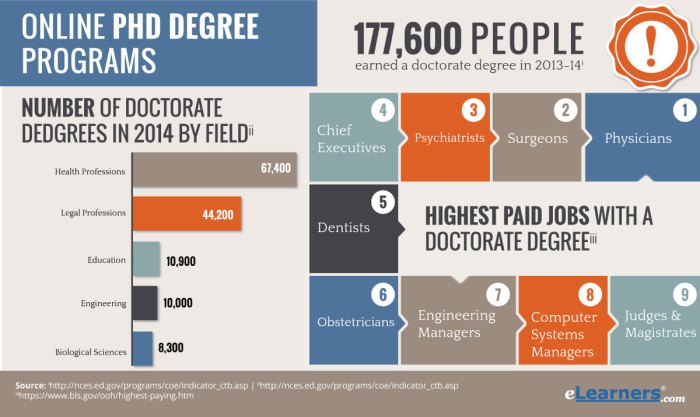
Doctoral programs are designed to equip students with advanced knowledge and research skills, preparing them for careers in academia, research, or other specialized fields. The curriculum structure is typically rigorous and multifaceted, focusing on coursework, research, and dissertation development.
Curriculum Structure and Requirements
Doctoral programs generally follow a structured curriculum that includes coursework, research, and dissertation requirements. The specific structure may vary depending on the field of study and the institution, but common elements include:
- Coursework:Doctoral students typically take advanced courses in their chosen field, building upon their foundational knowledge and exploring specialized topics. These courses may cover theoretical frameworks, research methodologies, and cutting-edge developments within the discipline.
- Research:A significant portion of the doctoral program is dedicated to research. Students engage in independent research projects, often culminating in a dissertation that presents original findings and contributions to the field.
- Dissertation:The dissertation is the cornerstone of the doctoral program. It is a lengthy and in-depth research project that requires students to demonstrate their mastery of the field, research skills, and ability to contribute new knowledge. The dissertation typically involves a comprehensive literature review, data collection and analysis, and a detailed discussion of the findings and their implications.
Role of Faculty Advisors and Research Mentors
Faculty advisors and research mentors play a crucial role in guiding doctoral students through their research journey. They provide support and guidance in:
- Research Topic Selection:Advisors help students identify suitable research topics that align with their interests and contribute meaningfully to the field.
- Research Design and Methodology:Mentors provide guidance on research design, data collection methods, and appropriate statistical analysis techniques.
- Dissertation Development:Advisors work closely with students throughout the dissertation process, providing feedback on drafts, offering suggestions for improvement, and ensuring that the research meets the highest academic standards.
Research Methodologies and Methods
Doctoral research employs a wide range of methodologies and methods, depending on the field of study and the specific research question. Here is a table highlighting key methodologies and methods used in different fields:
| Field of Study | Research Methodologies | Research Methods |
|---|---|---|
| Social Sciences | Qualitative, Quantitative, Mixed Methods | Surveys, Interviews, Focus Groups, Ethnographic Observation, Experiments, Statistical Analysis |
| Humanities | Qualitative, Historical, Critical | Textual Analysis, Archival Research, Discourse Analysis, Literary Criticism |
| Sciences | Experimental, Observational, Theoretical | Laboratory Experiments, Field Studies, Modeling, Simulation, Data Analysis |
| Engineering | Design-based Research, Applied Research | Prototyping, Simulation, Optimization, Data Analysis, Field Testing |
Challenges and Rewards of Doctoral Study
Embarking on a doctoral journey is a transformative experience that demands dedication, resilience, and a thirst for knowledge. While the path may be challenging, the rewards are profound, shaping both personal and professional growth.
Challenges Faced by Doctoral Students
Doctoral studies present unique challenges that require careful consideration and effective strategies for navigating the academic landscape.
- Time Management:Balancing research, coursework, teaching responsibilities, and personal life demands meticulous time management. The demands of doctoral study can be overwhelming, making it crucial to prioritize tasks, set realistic goals, and develop effective time management techniques.
- Research Demands:Doctoral research requires a deep dive into a specific area of study, demanding extensive reading, critical thinking, and rigorous analysis. The process of identifying a research topic, conducting research, analyzing data, and writing a dissertation can be time-consuming and intellectually demanding.
- Academic Pressure:The pursuit of a doctoral degree often involves intense academic pressure, driven by the need to meet high standards of scholarship, publish research findings, and present work at conferences. This pressure can be compounded by the expectations of advisors, peers, and the academic community.
- Financial Considerations:Doctoral studies can be financially demanding, requiring funding for tuition, living expenses, and research costs. Securing scholarships, fellowships, and research grants can be a significant challenge, adding to the financial pressure.
- Isolation and Loneliness:Doctoral students often work independently, spending long hours immersed in research and writing. This can lead to feelings of isolation and loneliness, particularly for students who are geographically distant from their advisors or research colleagues.
Rewards of Pursuing a Doctoral Degree
The challenges of doctoral study are balanced by substantial rewards that extend beyond academic achievement.
- Intellectual Growth:Doctoral studies foster intellectual growth by deepening knowledge, developing critical thinking skills, and fostering a lifelong love of learning. The rigorous academic environment encourages students to think independently, question assumptions, and explore new perspectives.
- Knowledge Contribution:Doctoral research aims to contribute new knowledge to a field of study. By conducting original research and publishing findings, doctoral students play a vital role in advancing knowledge and shaping future research directions.
- Career Advancement:A doctoral degree opens doors to a wide range of career opportunities in academia, research, and industry. The advanced knowledge, research skills, and critical thinking abilities developed during doctoral studies are highly valued in diverse professional settings.
- Personal Growth:Doctoral studies foster personal growth by developing resilience, self-discipline, and a strong work ethic. The challenges faced during the program can help students build confidence, overcome obstacles, and develop a sense of accomplishment.
- Networking Opportunities:Doctoral programs provide opportunities to network with faculty, peers, and professionals in the field. These connections can lead to future collaborations, research opportunities, and career advancements.
Strategies for Overcoming Challenges and Maximizing Benefits
- Effective Time Management:Prioritize tasks, set realistic goals, and use time management tools to optimize productivity.
- Strong Support System:Build a strong support system by connecting with advisors, peers, family, and friends.
- Seek Guidance:Actively seek guidance from advisors, mentors, and other experienced researchers.
- Maintain a Healthy Work-Life Balance:Engage in activities outside of research to reduce stress and maintain a healthy lifestyle.
- Embrace Challenges as Opportunities for Growth:View challenges as opportunities for learning and personal development.
Outcome Summary
Embarking on a doctoral journey is a testament to an individual’s commitment to intellectual growth and a desire to make a lasting impact. It is a challenging yet rewarding path that demands dedication, perseverance, and a passion for pushing the limits of knowledge.
By understanding the intricacies of doctoral programs, prospective students can make informed decisions, navigate the application process effectively, and maximize their chances of success. The journey may be demanding, but the rewards – both personal and professional – are truly transformative.