The world of psychology is constantly evolving, and with it, the ways in which we learn about it. Online psychology degrees have become increasingly popular, offering a flexible and accessible path to a fulfilling career in this fascinating field. Whether you’re a recent high school graduate, a career changer, or simply seeking to expand your knowledge, an online psychology degree can open doors to a wide range of opportunities.
These programs provide a comprehensive understanding of human behavior, cognition, and mental health, equipping you with the skills and knowledge needed to make a positive impact on individuals and communities. From exploring the intricacies of the human mind to understanding the complexities of social interactions, an online psychology degree empowers you to contribute to a more informed and compassionate world.




Introduction to Online Psychology Degrees
The field of psychology has witnessed a surge in the popularity of online education, making it easier for aspiring professionals to pursue their academic goals. This shift towards online learning has opened up new avenues for individuals seeking a career in psychology.
Online psychology degrees offer a flexible and convenient way to gain valuable knowledge and skills in the field, while also accommodating diverse schedules and lifestyles.
Benefits of Pursuing an Online Psychology Degree
Online psychology degrees offer numerous benefits, making them an attractive option for many students.
- Flexibility and Convenience:Online programs allow students to study at their own pace and on their own schedule, making it possible to balance work, family, and personal commitments with their education.
- Accessibility:Online learning eliminates geographical barriers, allowing students from all over the world to access quality psychology education.
- Affordability:Online programs can be more affordable than traditional on-campus programs, as they often have lower tuition fees and eliminate the need for relocation or commuting.
- Variety of Programs:Online psychology programs are available at all levels, including bachelor’s, master’s, and doctoral degrees, offering a wide range of specialization options.
- Technology-Enhanced Learning:Online programs utilize innovative technologies, such as video conferencing, interactive simulations, and online forums, to enhance the learning experience.
Types of Online Psychology Degrees
Online psychology degrees are offered at various levels, catering to different career aspirations and educational backgrounds.
- Bachelor’s Degree in Psychology:A bachelor’s degree in psychology provides a foundational understanding of psychological principles, research methods, and theories. It prepares students for entry-level positions in fields such as human resources, social work, and market research.
- Master’s Degree in Psychology:A master’s degree in psychology offers advanced training in specialized areas, such as clinical psychology, counseling psychology, or industrial-organizational psychology. It qualifies graduates for positions in research, teaching, and clinical practice.
- Doctoral Degree in Psychology:A doctoral degree in psychology, such as a Ph.D. or Psy.D., is the highest level of education in the field. It involves rigorous research and training, preparing graduates for careers as professors, researchers, and licensed psychologists.
Accreditation and Program Quality
Accreditation plays a crucial role in ensuring the quality and legitimacy of online psychology programs. It serves as a benchmark for academic rigor, ethical standards, and program effectiveness.
Accreditation signifies that a program meets specific quality standards set by independent organizations. It provides assurance to students and employers that the program adheres to best practices in psychology education. Choosing an accredited program is essential for maximizing career opportunities and ensuring a sound educational foundation.
Reputable Accrediting Bodies
Reputable accrediting bodies for online psychology programs are responsible for evaluating and recognizing programs that meet their established criteria. These bodies conduct rigorous reviews, ensuring that programs maintain high academic standards, ethical practices, and effective curriculum design.
Here are some of the most reputable accrediting bodies for online psychology programs:
- The American Psychological Association (APA): The APA Commission on Accreditation (CoA) is the gold standard for psychology programs, including online programs. APA accreditation ensures that programs adhere to rigorous standards in curriculum, faculty qualifications, and student support services.
- The Council for Higher Education Accreditation (CHEA): CHEA recognizes accrediting bodies that meet specific quality standards. It provides a comprehensive list of accredited institutions and programs, ensuring that students can choose programs that have undergone a thorough review process.
- The Council on Social Work Education (CSWE): CSWE accredits social work programs, including online programs. While not specific to psychology, CSWE accreditation is relevant for programs with a focus on clinical mental health or social work-related psychology specialties.
Factors to Consider When Evaluating Program Quality
Beyond accreditation, it’s crucial to consider other factors when evaluating the quality of an online psychology program. This ensures that the program aligns with your individual needs and goals.
Here are some key factors to consider:
- Faculty Qualifications: The expertise and credentials of the program’s faculty are essential. Look for faculty members with advanced degrees in psychology, relevant experience, and a strong reputation in the field.
- Curriculum and Coursework: The program’s curriculum should align with your career aspirations and provide a comprehensive foundation in psychology. Consider the specific courses offered, the depth of coverage, and the relevance to your interests.
- Student Support Services: Online programs should provide adequate student support services, such as technical assistance, academic advising, and career counseling. Look for programs that offer personalized support to ensure your success.
- Program Reputation and Outcomes: Research the program’s reputation among employers and the success rate of its graduates. Look for evidence of graduates’ job placement, research publications, or other accomplishments.
- Technology and Online Learning Environment: The program’s technology infrastructure and online learning environment should be user-friendly, reliable, and conducive to effective learning. Consider factors such as the platform’s ease of use, the availability of multimedia resources, and the program’s technical support.
Career Paths with an Online Psychology Degree
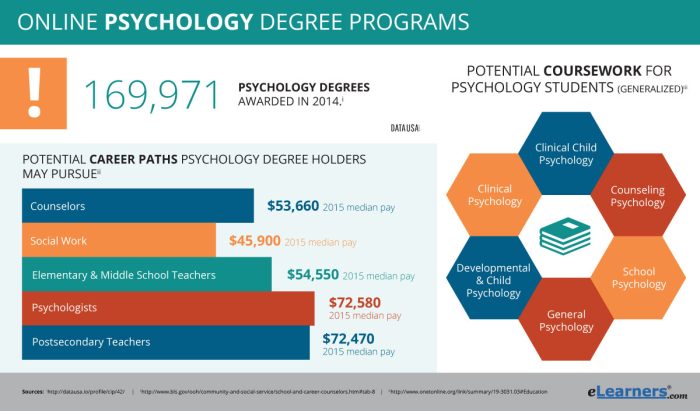
An online psychology degree can open doors to a wide range of rewarding career paths, offering opportunities to make a positive impact on individuals, communities, and society.
Examples of Careers
An online psychology degree equips individuals with valuable knowledge and skills that are highly sought after in various fields. Here are some examples of careers that can be pursued with an online psychology degree:
- Mental Health Counselor:Provide therapy and counseling services to individuals, families, and groups experiencing mental health challenges.
- School Psychologist:Work in educational settings to support students’ academic, social, and emotional well-being.
- Human Resources Specialist:Apply psychological principles to employee recruitment, training, and development, promoting a positive and productive work environment.
- Market Research Analyst:Conduct research to understand consumer behavior and preferences, informing marketing strategies and product development.
- Social Worker:Advocate for and support individuals and families facing social and economic challenges, connecting them with resources and services.
Potential for Career Advancement
An online psychology degree can serve as a foundation for career advancement, providing individuals with the knowledge and skills to pursue leadership roles and specialized areas within their chosen field.
- Continuing Education:Many online psychology programs offer specialized certificates and advanced degrees, allowing individuals to deepen their knowledge and expertise in specific areas of psychology.
- Professional Licensure:Earning a license as a psychologist, counselor, or social worker can significantly enhance career prospects and earning potential.
- Networking and Professional Development:Online psychology programs often provide opportunities for networking with professionals in the field, attending conferences, and participating in professional organizations.
Preparation for the Job Market
Online psychology programs are designed to equip students with the necessary knowledge, skills, and experience to succeed in the job market.
- Practical Experience:Many online psychology programs incorporate practical experience through internships, fieldwork, or research opportunities, allowing students to apply their knowledge in real-world settings.
- Developing Essential Skills:Online psychology programs focus on developing critical thinking, problem-solving, communication, and interpersonal skills, which are highly valued by employers across industries.
- Technology Integration:Online psychology programs emphasize the use of technology in research, practice, and communication, preparing students for the increasingly digital landscape of the mental health field.
Pros and Cons of Online Psychology Education
The decision to pursue an online psychology degree is a significant one. It’s essential to weigh the potential benefits and challenges to determine if this learning path aligns with your individual needs and learning style. Online psychology programs offer a unique blend of flexibility and accessibility, but they also come with specific considerations that should be carefully evaluated.
Advantages of Online Psychology Education
Online psychology programs offer several advantages that can make them an attractive option for many students. These advantages include:
- Flexibility:Online programs provide the flexibility to study at your own pace and on your own schedule. This is especially beneficial for students with busy lives, such as working professionals or parents. You can access course materials and participate in discussions anytime and anywhere with an internet connection.
- Affordability:Online programs can often be more affordable than traditional on-campus programs. This is because online institutions typically have lower overhead costs, which they can pass on to students in the form of lower tuition fees. Additionally, online programs may offer scholarships and financial aid options that are not available to on-campus students.
- Accessibility:Online programs are accessible to students from all over the world. This is a major advantage for students who live in remote areas or who are unable to relocate for their studies. It also allows students to study from the comfort of their own homes, which can be a significant advantage for students with disabilities or other limitations.
- Variety of Programs:Online psychology programs are available at all levels, from associate’s degrees to doctoral degrees. This means that students can find a program that meets their specific needs and career goals. The diverse range of programs caters to various interests within psychology, such as counseling, research, or clinical practice.
Obtain access to Accredited Online College Course to private resources that are additional.
Challenges of Online Psychology Education
While online psychology education offers numerous advantages, it also presents some challenges that students should be aware of. These challenges include:
- Lack of Face-to-Face Interaction:One of the biggest challenges of online learning is the lack of face-to-face interaction with instructors and fellow students. This can make it difficult to build relationships and receive immediate feedback on your work. However, online programs often employ strategies to foster a sense of community, such as online discussion forums and group projects.
- Technical Difficulties:Online learning requires access to a reliable internet connection and a computer or mobile device. Technical difficulties can arise, such as internet outages or software problems, which can disrupt your studies. It’s essential to have a backup plan in place in case of technical issues.
- Self-Discipline:Online learning requires a high level of self-discipline. Students must be able to manage their time effectively and stay motivated to complete their studies.
- Limited Practical Experience:Some online programs may offer limited opportunities for hands-on practical experience. This is particularly relevant for psychology programs, as practical experience is crucial for developing clinical skills. It’s important to look for programs that offer internships, practicums, or other opportunities for real-world experience.
Tips for Overcoming Challenges of Online Psychology Education
Despite the challenges, there are strategies you can employ to overcome them and succeed in your online psychology program:
- Establish a Dedicated Study Space:Create a dedicated workspace free from distractions. This will help you focus and avoid interruptions during your study sessions.
- Develop a Schedule and Stick to It:Plan your study time in advance and allocate specific blocks of time for each course. This will help you stay organized and avoid falling behind.
- Engage in Online Discussions:Participate actively in online discussions with your classmates and instructors. This is a great way to learn from others and build relationships.
- Seek Support from Your Instructor and Peers:Don’t hesitate to reach out to your instructor or classmates if you need help or clarification on course material. Most online programs offer support services and resources to help students succeed.
- Prioritize Time Management:Manage your time effectively to balance your studies with other commitments. This may involve scheduling study time around work or family obligations.
- Utilize Technology:Explore and utilize online tools and resources to enhance your learning experience. This can include online dictionaries, study guides, and research databases.
Tips for Choosing an Online Psychology Program
Choosing the right online psychology program can be a daunting task, given the variety of options available. It’s crucial to consider factors like program quality, accreditation, cost, and personal learning style to make an informed decision. This section provides tips and resources to guide you through the selection process.
Factors to Consider When Choosing an Online Psychology Program
It’s important to carefully consider various factors when choosing an online psychology program to ensure it aligns with your academic and career goals.
Program Quality and Accreditation
- Accreditation:Look for programs accredited by the American Psychological Association (APA) or the Council for Higher Education Accreditation (CHEA). Accreditation signifies that the program meets specific quality standards and prepares graduates for professional careers.
- Faculty:Research the faculty’s qualifications and experience. Look for professors with strong academic credentials and relevant industry experience.
- Curriculum:Review the program’s curriculum to ensure it covers the core psychology concepts and skills you need. Consider if the program offers specializations or elective courses that align with your interests.
- Resources and Support:Inquire about the online learning platform, technical support, and academic advising services provided.
Cost and Financial Aid
- Tuition and Fees:Compare the cost of different programs, including tuition, fees, and textbooks.
- Financial Aid:Explore available financial aid options, such as scholarships, grants, and student loans.
Learning Style and Career Goals
- Learning Style:Consider your preferred learning style. Some online programs offer more interactive learning experiences, while others are more lecture-based.
- Career Goals:Determine your career aspirations and research which programs prepare graduates for specific roles.
Tips for Researching and Comparing Online Psychology Programs
- Start with a List of Potential Programs:Use online directories, such as the APA’s Directory of Psychology Programs, to identify programs that meet your criteria.
- Visit Program Websites:Explore the websites of potential programs to learn about their curriculum, faculty, and student resources.
- Read Reviews and Testimonials:Check online forums and student reviews to get insights into the program’s quality and student experience.
- Contact Admissions Representatives:Reach out to admissions representatives for additional information and to ask specific questions.
Example Table of Online Psychology Programs
Here is a sample table comparing various online psychology programs, illustrating the factors you should consider:
| Program Name | Institution | Degree Level | Accreditation | Cost |
|---|---|---|---|---|
| Master of Arts in Psychology | University of California, Berkeley | Master’s | APA-accredited | $35,000 |
| Doctor of Psychology (PsyD) | University of Denver | Doctoral | APA-accredited | $60,000 |
| Bachelor of Arts in Psychology | Arizona State University | Bachelor’s | CHEA-accredited | $20,000 |
Last Recap
In a world where technology continues to shape our lives, online psychology degrees provide a valuable pathway to personal and professional growth. They offer flexibility, affordability, and a chance to learn from renowned experts in the field. Whether you’re drawn to research, therapy, or other areas of psychology, an online degree can equip you with the tools and knowledge to pursue your passion and make a difference in the lives of others.
As the field of psychology continues to advance, online programs will undoubtedly play an even greater role in shaping the future of mental health and well-being.