Student Loan Deferment: Your Guide to Pausing Payments and Understanding the Implications

Navigating the complex world of student loans can feel overwhelming, especially when faced with the daunting prospect of repayment. Student loan deferment offers a temporary reprieve, allowing borrowers to pause their monthly payments for a set period. But before you jump at the chance to hit that pause button, it’s crucial to understand the nuances of deferment and its potential impact on your overall loan burden.
Deferment isn’t a free pass to escape your student loan obligations. While it provides temporary relief, it doesn’t erase your debt. Interest can still accrue during deferment, potentially increasing your overall loan balance. This guide will delve into the intricacies of student loan deferment, exploring different deferment options, their eligibility criteria, and the implications for your loan repayment journey.




Understanding Student Loan Deferment
Student loan deferment allows you to temporarily postpone making payments on your student loans. This can be a helpful option if you’re facing financial hardship, returning to school, or serving in the military.
Types of Deferment Options
Deferment options are designed to provide flexibility for borrowers facing various situations. Here are some common types of deferment:
- Economic Hardship Deferment:This deferment is available to borrowers who are experiencing financial hardship, such as unemployment or a significant reduction in income.
- Graduate Fellowship Deferment:This deferment is available to borrowers who are enrolled in a graduate fellowship program.
- Military Deferment:This deferment is available to borrowers who are serving in the military.
- Unemployment Deferment:This deferment is available to borrowers who are unemployed.
- Rehabilitation Deferment:This deferment is available to borrowers who are enrolled in a rehabilitation program for a disability.
- Parent PLUS Loan Deferment:This deferment is available to borrowers who are parents of a dependent student enrolled at least half-time in an eligible program.
Eligibility Criteria for Deferment
Each type of deferment has specific eligibility requirements. For example, to qualify for economic hardship deferment, you must demonstrate that you are unable to make your loan payments due to financial hardship. To qualify for graduate fellowship deferment, you must be enrolled in a graduate fellowship program that is at least half-time.
Impact of Deferment on Interest Accrual and Loan Balance
While deferment allows you to temporarily postpone payments, interest may continue to accrue on your loan during the deferment period. This means that your loan balance may increase, even though you are not making payments.
For example:If you have a $10,000 student loan with a 5% interest rate and you defer your loan for one year, you will accrue $500 in interest during that year. This $500 will be added to your loan balance, even though you are not making any payments.
Deferment vs. Forbearance
Both deferment and forbearance are options that allow borrowers to temporarily pause their student loan payments. While they seem similar, there are crucial differences that can significantly impact your loan balance and overall repayment strategy. Understanding these distinctions is vital for making informed decisions about your student loan management.
Key Differences
The main differences between deferment and forbearance lie in eligibility, interest accrual, and the impact on your loan balance.
- Eligibility:Deferment is generally based on specific circumstances, such as enrollment in school, unemployment, or active military service. Forbearance, on the other hand, is often granted at the lender’s discretion, and may be available for reasons like financial hardship or a temporary inability to make payments.
- Interest Accrual:A key distinction lies in interest accrual. In deferment, interest may or may not accrue depending on the type of deferment. For subsidized loans, interest is usually not charged during deferment. However, for unsubsidized loans, interest continues to accrue.
In forbearance, interest always accrues, even on subsidized loans.
- Loan Balance Impact:The accrual of interest during deferment or forbearance can significantly impact your loan balance. Since interest is not paid during these periods, it is added to the principal, increasing the overall amount you owe. This phenomenon is known as “capitalization,” and it can lead to a larger loan balance than if you had continued making payments.
Advantages and Disadvantages
| Feature | Deferment | Forbearance |
|---|---|---|
| Eligibility | Based on specific circumstances (e.g., school enrollment, unemployment, military service) | Granted at lender’s discretion, often for financial hardship or temporary inability to make payments |
| Interest Accrual | May or may not accrue depending on loan type (subsidized vs. unsubsidized) | Interest always accrues, even on subsidized loans |
| Loan Balance Impact | Can lead to capitalization if interest accrues | Capitalization is common, leading to a larger loan balance |
| Advantages | May offer temporary relief from payments, can prevent interest from accruing on subsidized loans | Provides flexibility for borrowers facing temporary financial challenges |
| Disadvantages | Can lead to a larger loan balance due to capitalization | Interest accrual can significantly increase the loan balance |
Common Deferment Scenarios
Student loan deferment allows borrowers to temporarily pause their loan payments without accruing interest. This option is available under certain circumstances, such as unemployment, graduate school enrollment, or military service.
Check Federal student loans to inspect complete evaluations and testimonials from users.
Deferment for Unemployment
Unemployment deferment is a temporary relief option for borrowers who have lost their jobs and are actively seeking new employment. This deferment allows borrowers to pause their loan payments while they transition between jobs.
- To qualify for unemployment deferment, borrowers must provide documentation of their unemployment status, such as a notice of unemployment benefits or a letter from a state unemployment agency.
- The deferment period typically lasts for up to three years, but may be extended depending on the borrower’s circumstances and the lender’s policies.
- During the deferment period, interest may accrue on subsidized loans, but not on unsubsidized loans. However, interest will be capitalized at the end of the deferment period, meaning it will be added to the principal balance.
Deferment for Graduate School Enrollment
Graduate school deferment is an option for borrowers who are enrolled in a qualifying graduate program. This deferment allows borrowers to pause their loan payments while they focus on their studies.
- To qualify for graduate school deferment, borrowers must provide documentation of their enrollment in a qualifying graduate program, such as a letter of acceptance or a transcript.
- The deferment period typically lasts for the duration of the graduate program, but may be extended depending on the borrower’s circumstances and the lender’s policies.
- During the deferment period, interest may accrue on subsidized loans, but not on unsubsidized loans. However, interest will be capitalized at the end of the deferment period, meaning it will be added to the principal balance.
Deferment for Military Service
Military deferment is an option for borrowers who are serving in the military. This deferment allows borrowers to pause their loan payments while they are on active duty.
- To qualify for military deferment, borrowers must provide documentation of their active duty status, such as a military identification card or orders.
- The deferment period typically lasts for the duration of the borrower’s active duty service, but may be extended depending on the borrower’s circumstances and the lender’s policies.
- During the deferment period, interest may accrue on subsidized loans, but not on unsubsidized loans. However, interest will be capitalized at the end of the deferment period, meaning it will be added to the principal balance.
Deferment and Loan Forgiveness Programs
Student loan deferment can have a significant impact on loan forgiveness programs, including Public Service Loan Forgiveness (PSLF). Understanding how deferment periods affect eligibility and progress towards loan forgiveness is crucial for borrowers seeking to benefit from these programs.
Impact of Deferment on Loan Forgiveness Programs
Deferment periods can impact loan forgiveness programs in various ways. It is essential to understand how these periods affect eligibility and progress towards loan forgiveness.
- Eligibility:Some loan forgiveness programs, like PSLF, require borrowers to make a specific number of qualifying payments. Deferment periods generally do not count towards these qualifying payments, potentially delaying eligibility for forgiveness.
- Progress Towards Forgiveness:Deferment periods can also impact the progress towards loan forgiveness. While payments made during deferment periods are not counted towards the required number of qualifying payments, the interest on the loan may still accrue. This means that the total amount owed may increase, even though no payments are being made during the deferment period.
Examples of Deferment and Loan Forgiveness
Here are some examples of how deferment can impact loan forgiveness:
- Positive Impact:A borrower with a significant amount of student loan debt may defer payments during a period of financial hardship. This can help them avoid defaulting on their loans and potentially qualify for forgiveness programs later.
- Negative Impact:A borrower who is eligible for PSLF may defer payments for several years. While this may provide temporary relief, it could delay their eligibility for forgiveness, as the deferment periods will not count towards the required number of qualifying payments.
Considerations Before Deferment
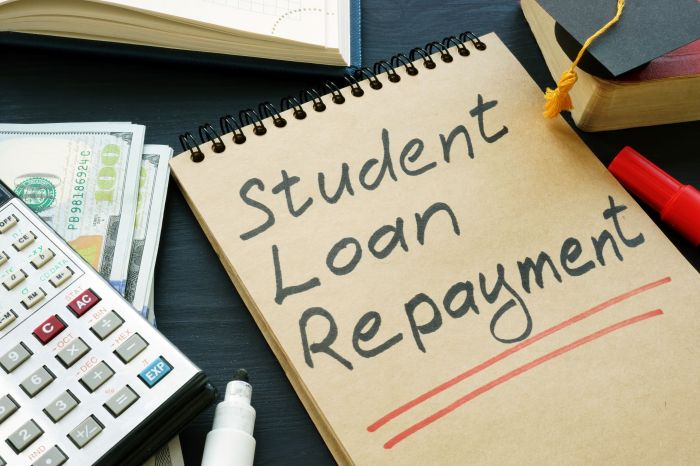
Before applying for student loan deferment, it’s essential to carefully consider the potential implications and explore alternative solutions. Deferment can offer temporary relief, but it’s not always the most financially sound option in the long run.
Financial Implications of Deferment
Deferment may seem like a convenient solution to immediate financial hardship, but it’s crucial to understand the associated financial implications. While deferment pauses your monthly loan payments, it doesn’t erase your debt. Interest continues to accrue on your loans, increasing the total amount you’ll need to repay.
Deferment doesn’t erase your debt; it merely postpones it, and the interest continues to accrue, increasing your total repayment burden.
- Interest Accrual:Interest continues to accumulate on your loans during the deferment period, even though you’re not making payments. This accrued interest is capitalized, meaning it’s added to your principal loan balance, increasing your overall debt. The longer you defer, the more interest you’ll accrue, leading to a larger final repayment amount.
- Extended Repayment Period:Deferment can extend your loan repayment period, leading to higher overall interest costs. The longer you take to repay your loans, the more interest you’ll pay over time. This can significantly impact your long-term financial goals and affordability.
- Impact on Credit Score:While deferment doesn’t directly affect your credit score, it can indirectly impact it if you miss payments or default on your loans. If you fail to resume payments after the deferment period, it can negatively affect your credit score and limit your access to future credit.
Alternative Solutions to Deferment
Before opting for deferment, consider alternative solutions that might better suit your financial situation.
- Income-Driven Repayment Plans:Income-driven repayment (IDR) plans base your monthly payments on your income and family size. These plans can significantly reduce your monthly payments and potentially lower your overall repayment costs. IDR plans can also offer loan forgiveness after a certain period of qualifying payments.
- Loan Consolidation:Consolidating your student loans into a single loan can simplify your repayment process and potentially lower your interest rate. However, it’s essential to consider the long-term implications of consolidation, including the possibility of a longer repayment period and higher overall interest costs.
- Repayment Plans with Lower Monthly Payments:Explore alternative repayment plans offered by your loan servicer that may offer lower monthly payments. These plans might include extended repayment periods, graduated repayment options, or other flexible payment arrangements.
Final Summary
Student loan deferment can be a valuable tool for navigating financial challenges or pursuing specific life goals. However, it’s essential to approach it with a clear understanding of its implications. Weighing the pros and cons, considering alternative repayment options, and seeking professional guidance can help you make informed decisions that align with your long-term financial well-being.