The weight of student loan debt can feel overwhelming, but there’s a path to financial freedom – student loan consolidation. This powerful tool allows you to combine multiple student loans into a single, manageable loan, potentially offering lower monthly payments, a fixed interest rate, and simplified repayment.
But is it the right solution for you? Let’s dive into the intricacies of student loan consolidation and explore its potential benefits and drawbacks.






Student loan consolidation isn’t a one-size-fits-all solution. It’s essential to understand its nuances, explore different consolidation options, and weigh the pros and cons before making a decision. This guide will empower you with the knowledge to navigate the world of student loan consolidation and make informed choices for your financial future.
Understanding Student Loan Consolidation
Student loan consolidation is a process that combines multiple student loans into a single new loan with a new interest rate and repayment terms. This can simplify your repayment process, potentially lower your monthly payments, and help you manage your debt more effectively.
Types of Student Loans That Can Be Consolidated
Consolidation can encompass various types of federal student loans, including:
- Direct Loans
- Federal Family Education Loan (FFEL) Program Loans
- Perkins Loans
It’s important to note that private student loans are typically not eligible for federal consolidation programs.
Benefits of Student Loan Consolidation
Consolidation can offer several advantages:
- Simplified Repayment: By combining multiple loans into one, you’ll have a single monthly payment, making it easier to track and manage your debt.
- Potential Lower Interest Rate: While the new interest rate is typically a weighted average of your existing loan rates, you may qualify for a lower rate, especially if you have a good credit history.
- Extended Repayment Term: Consolidation can allow you to stretch out your repayment period, potentially reducing your monthly payments. However, this can also lead to higher overall interest costs.
- Access to Repayment Plans: Consolidation can make you eligible for different repayment plans, such as income-driven repayment plans, which adjust your monthly payments based on your income.
Situations Where Consolidation Might Be Beneficial
- Multiple Student Loans with Different Interest Rates: If you have loans with varying interest rates, consolidation can help you secure a lower average rate, saving you money in the long run.
- Difficulty Managing Multiple Loans: Consolidating your loans can simplify your repayment process and make it easier to track your progress.
- Desire for a Longer Repayment Term: If you’re struggling to make your monthly payments, consolidation can extend your repayment period, reducing your monthly obligations.
Benefits of Student Loan Consolidation
Consolidating student loans can offer significant advantages, simplifying your repayment process and potentially reducing your overall costs. By combining multiple loans into a single loan, you can achieve a more manageable monthly payment, a fixed interest rate, and a streamlined repayment plan.
Lower Monthly Payments
Consolidation can lead to lower monthly payments, making it easier to manage your finances. When you consolidate, your lender may extend the repayment term, spreading your debt over a longer period. This results in smaller monthly installments, freeing up cash flow for other expenses.
For example, if you have multiple loans with varying interest rates, consolidating them into a single loan with a lower average interest rate can result in a lower monthly payment.
Fixed Interest Rate
Consolidating your student loans can provide the benefit of a fixed interest rate, protecting you from fluctuating interest rates. With a fixed rate, your monthly payments remain consistent, making budgeting easier and reducing the risk of unexpected increases in your debt.
For instance, if you have variable-rate loans, consolidating them into a fixed-rate loan can eliminate the uncertainty associated with interest rate fluctuations.
Simplified Repayment
Consolidating student loans simplifies the repayment process by reducing the number of loans you need to track and manage. You’ll have one monthly payment to make, one loan servicer to communicate with, and one repayment schedule to follow.
Imagine managing multiple loans with different due dates, interest rates, and loan servicers. Consolidation eliminates this complexity, simplifying your repayment journey.
Impact on Credit Score
Consolidation can have a positive impact on your credit score, particularly if you have a history of late payments or missed payments on your student loans. By consolidating, you can improve your credit utilization ratio, which is a key factor in determining your credit score.
A lower credit utilization ratio, achieved through consolidation, can lead to an improved credit score, making it easier to secure loans and credit cards in the future.
Loan Terms
While consolidation can offer benefits, it’s important to understand how it can impact your loan terms. Consolidating your loans may extend the repayment term, potentially increasing the total amount of interest you pay over the life of the loan.
It’s crucial to carefully consider the new loan terms, including the interest rate, repayment term, and any associated fees, before making a decision to consolidate.
Real-World Examples
Many individuals have successfully consolidated their student loans, experiencing positive outcomes. For example, a recent graduate with multiple loans at varying interest rates consolidated their debt into a single loan with a lower average interest rate. This resulted in a lower monthly payment, freeing up more cash flow for other expenses.
For descriptions on additional topics like Doctoral Programs, please visit the available Doctoral Programs.
Another example involves a borrower with a history of late payments on their student loans. By consolidating their loans, they improved their credit utilization ratio and saw a significant increase in their credit score.
The Consolidation Process
The process of consolidating student loans involves combining multiple loans into a single loan with a new interest rate and repayment terms. This can streamline your repayment process, potentially lower your monthly payments, and potentially reduce the overall interest you pay.
Steps Involved in Consolidating Student Loans
The consolidation process typically involves several steps, including:
- Gathering Necessary Documents:Begin by collecting essential documents, such as your Social Security number, loan details (including loan numbers, balances, interest rates, and lenders), and income information. These documents will be needed to apply for consolidation and verify your eligibility.
- Choosing a Consolidation Lender:You have options when selecting a lender. You can consider your current loan servicer or explore other lenders offering consolidation programs. Compare interest rates, fees, and repayment terms offered by different lenders to find the best option for your financial situation.
- Applying for Consolidation:Once you’ve chosen a lender, complete the application process, providing the required documents. The lender will review your application and credit history to determine your eligibility and the terms of your consolidated loan.
- Understanding the Approval Process:The approval process can take several weeks. The lender will review your application and credit history, and if approved, you’ll receive a loan agreement outlining the terms of your consolidated loan. Review the agreement carefully before signing to ensure you understand the terms, interest rate, and repayment schedule.
Comparing Different Consolidation Loan Offers
To make an informed decision, compare different consolidation loan offers from various lenders. Consider the following factors:
- Interest Rate:Compare the interest rates offered by different lenders. A lower interest rate can significantly reduce the total interest you pay over the life of the loan.
- Fees:Pay attention to any fees associated with the consolidation process, such as origination fees or application fees. These fees can add to the overall cost of the loan.
- Repayment Terms:Consider the repayment terms, including the loan term and monthly payment amount. Choose a repayment term that fits your budget and financial goals.
- Loan Servicer:Research the loan servicer associated with the consolidation loan. A reputable loan servicer provides excellent customer service and transparent communication.
Potential Risks and Drawbacks of Consolidation
While consolidation can simplify repayment and potentially lower monthly payments, it’s important to be aware of potential risks and drawbacks:
- Higher Overall Interest Paid:If you consolidate loans with different interest rates, you might end up with a higher overall interest rate on the consolidated loan. This could lead to paying more interest over the life of the loan.
- Extended Repayment Term:Consolidation can extend your repayment term, leading to higher overall interest payments. Choose a repayment term that aligns with your financial goals and avoids extending the repayment period unnecessarily.
- Loss of Benefits:Consolidating certain loans, such as subsidized federal loans, might result in losing certain benefits like interest subsidies or income-driven repayment plans. Carefully consider the potential loss of benefits before consolidating.
Consolidation vs. Refinancing
Student loan consolidation and refinancing are two common strategies for managing student debt. While they share some similarities, they differ significantly in their mechanisms and potential outcomes. Understanding these differences is crucial for making informed decisions about your student loans.
Key Differences and Similarities
Consolidation and refinancing are both processes that combine multiple student loans into a single loan. However, their key differences lie in the interest rate, loan terms, and eligibility criteria.
- Interest Rate:Consolidation typically results in a weighted average interest rate based on the interest rates of your existing loans. Refinancing, on the other hand, offers the potential for a lower interest rate if your credit score and financial situation qualify.
- Loan Terms:Consolidation often extends the repayment term, potentially lowering your monthly payments but increasing the total interest paid over the life of the loan. Refinancing may allow you to choose a shorter repayment term, leading to higher monthly payments but potentially saving on interest.
- Eligibility Criteria:Consolidation is generally easier to qualify for, as it primarily focuses on combining existing federal loans. Refinancing, however, often requires a good credit score and a stable financial history to secure a lower interest rate.
Situations Favoring Consolidation
Consolidation might be a better option than refinancing in certain scenarios.
- Lower Interest Rate:If your existing loans have variable interest rates, consolidation can lock in a fixed rate, providing stability and predictability in your monthly payments.
- Simplified Repayment:Consolidation simplifies your repayment process by combining multiple loans into a single monthly payment, making it easier to manage your debt.
- Eligibility for Federal Benefits:Federal consolidation loans qualify for various benefits, such as income-driven repayment plans and loan forgiveness programs, which may not be available for private loans.
Situations Favoring Refinancing
Refinancing can be a more advantageous option in specific situations.
- Lower Interest Rate:If you have a good credit score and a strong financial history, refinancing can potentially secure a lower interest rate than your existing loans, significantly reducing your overall interest costs.
- Shorter Repayment Term:Refinancing allows you to choose a shorter repayment term, potentially saving on interest and accelerating your debt payoff.
- Access to Private Loan Benefits:Private refinancing loans may offer features like flexible repayment options, hardship deferment, or cosigner release that are not available with federal consolidation loans.
Factors to Consider
When choosing between consolidation and refinancing, consider the following factors:
- Credit Score and Financial History:Your credit score and financial history play a crucial role in determining your eligibility for refinancing and the interest rate you can obtain.
- Interest Rate and Loan Terms:Compare the interest rates and loan terms offered by consolidation and refinancing options to determine which option provides the most favorable conditions.
- Federal Loan Benefits:If you have federal student loans, consider the potential loss of federal benefits like income-driven repayment plans and loan forgiveness programs if you refinance into a private loan.
- Financial Situation and Repayment Goals:Evaluate your financial situation and repayment goals to determine whether a longer repayment term or a lower interest rate is more beneficial for you.
Finding the Right Consolidation Loan
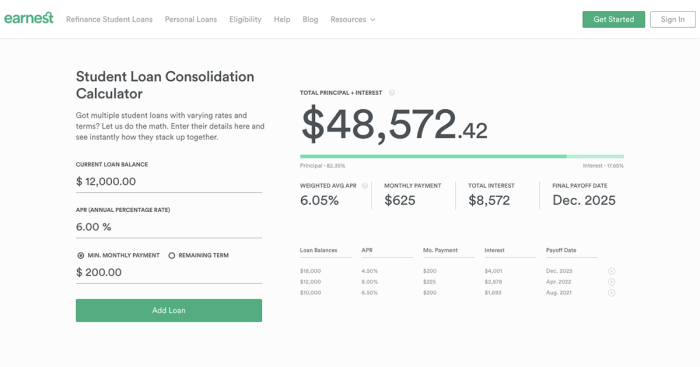
Finding the right student loan consolidation loan can significantly impact your monthly payments and overall debt burden. This process requires careful consideration of various factors and a thorough comparison of different lenders and their offers. By understanding the key elements and following a strategic approach, you can secure a consolidation loan that aligns with your financial goals and provides substantial relief.
Factors to Consider
To find the best student loan consolidation option, you need to evaluate several key factors:
- Interest Rate:The interest rate determines the cost of borrowing. Lower interest rates translate to lower monthly payments and less overall interest paid. Compare interest rates from multiple lenders to find the most favorable option.
- Fees:Consolidation loans may come with fees, such as origination fees, which are a percentage of the loan amount. These fees can add to the overall cost of the loan, so it’s essential to factor them into your calculations.
- Loan Terms:Loan terms encompass the repayment period and the monthly payment amount. A longer repayment term may result in lower monthly payments but can lead to higher overall interest charges. Choose a term that aligns with your financial capacity and repayment goals.
- Loan Type:Different lenders offer various types of consolidation loans, such as fixed-rate or variable-rate loans. Fixed-rate loans provide predictable monthly payments, while variable-rate loans may fluctuate with market interest rates.
- Eligibility Requirements:Each lender has specific eligibility requirements for consolidation loans. Ensure you meet these requirements before applying. Factors like credit score, debt-to-income ratio, and income verification are commonly considered.
Researching and Comparing Lenders
Researching and comparing offers from multiple lenders is crucial to finding the best consolidation loan. Consider the following strategies:
- Online Lenders:Many online lenders specialize in student loan consolidation and offer competitive rates and flexible terms. Use online comparison tools to quickly compare offers from different lenders.
- Banks and Credit Unions:Traditional financial institutions like banks and credit unions may also offer consolidation loans. Explore their options and compare their rates, fees, and terms with those of online lenders.
- Government Programs:The federal government offers consolidation programs through the Department of Education. These programs can provide lower interest rates and flexible repayment options, especially for borrowers with federal loans.
Negotiating Loan Terms
Once you’ve identified potential lenders, you can negotiate loan terms to secure the most favorable consolidation loan. Consider these tips:
- Shop Around:Get quotes from multiple lenders to leverage their competition. This can help you secure a better interest rate and lower fees.
- Negotiate the Interest Rate:If you have a strong credit score and a good debt-to-income ratio, you may be able to negotiate a lower interest rate. Emphasize your financial stability and positive credit history.
- Request Fee Waivers:Some lenders may be willing to waive origination fees or other charges. Don’t hesitate to ask for these concessions during negotiations.
- Consider Loan Terms:Explore different loan terms and see if you can secure a longer repayment period to lower your monthly payments. However, be mindful of the potential increase in overall interest charges.
Case Studies and Examples
Understanding the potential impact of student loan consolidation requires examining real-world scenarios. Case studies offer valuable insights into how consolidation can affect individuals’ financial situations, highlighting both the benefits and potential drawbacks.
Real-World Case Studies
Case studies demonstrate the varied outcomes of student loan consolidation. Here are examples:
- Sarah, a recent graduate with $50,000 in student loans at varying interest rates, consolidated her loans into a single loan with a lower fixed interest rate. This reduced her monthly payment by $100 and shortened her repayment term by several years. This example illustrates the potential for significant savings and faster debt repayment through consolidation.
- John, a teacher with $75,000 in student loans, consolidated his loans to take advantage of a lower interest rate offered by a federal consolidation program. However, his loan term was extended, resulting in a slightly higher total interest paid over the life of the loan. This case study highlights the importance of carefully considering the terms of the consolidation loan and the potential trade-offs.
Potential Impact of Consolidation on Different Loan Scenarios
The impact of consolidation varies depending on factors such as interest rates, loan amounts, and repayment terms. This table illustrates the potential impact of consolidation on different loan scenarios:
| Scenario | Original Loan Amount | Original Interest Rate | Consolidated Loan Amount | Consolidated Interest Rate | Monthly Payment Reduction | Total Interest Paid (Original) | Total Interest Paid (Consolidated) |
|---|---|---|---|---|---|---|---|
| Scenario 1 | $30,000 | 6.00% | $30,000 | 4.50% | $50 | $10,800 | $8,100 |
| Scenario 2 | $50,000 | 7.50% | $50,000 | 6.00% | $100 | $25,000 | $20,000 |
| Scenario 3 | $75,000 | 9.00% | $75,000 | 7.50% | $150 | $45,000 | $37,500 |
Average Monthly Payment Reduction
Consolidation can significantly reduce monthly payments. A study by the Federal Reserve Bank of New York found that borrowers who consolidated their student loans experienced an average monthly payment reduction of 15%.
The average monthly payment reduction achieved through consolidation is 15%.
Final Wrap-Up
Student loan consolidation can be a game-changer, offering a path to reduced monthly payments and a more manageable debt burden. However, it’s crucial to approach the process with careful consideration, researching different lenders, comparing loan terms, and understanding the potential risks.
By equipping yourself with the right information and making informed decisions, you can harness the power of consolidation to achieve your financial goals and embark on a journey toward a brighter financial future.