Federal student loans are a lifeline for millions of Americans seeking higher education, offering a path to a brighter future. However, the process of applying, managing, and repaying these loans can be daunting, with a myriad of options and regulations to navigate.
This comprehensive guide aims to demystify the world of federal student loans, providing essential information and practical advice to help you make informed decisions and achieve your educational goals.




From understanding the different loan types and eligibility requirements to exploring repayment plans and loan forgiveness programs, this guide covers all the essential aspects of federal student loans. We will delve into the intricacies of the application process, the role of the Free Application for Federal Student Aid (FAFSA), and the various strategies for responsible debt management.
Ultimately, this guide will empower you with the knowledge and resources you need to navigate the complexities of federal student loans and pave the way for a successful future.
Repayment Options for Federal Student Loans
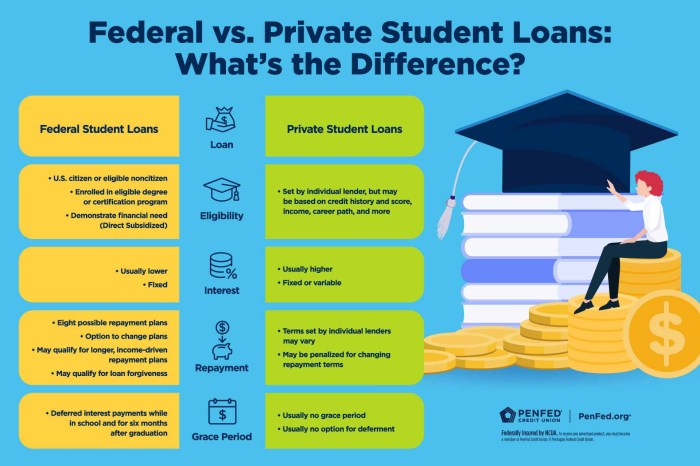
Once you graduate or leave school, you’ll need to start repaying your federal student loans. The U.S. Department of Education offers several repayment plans to help borrowers manage their debt. Choosing the right repayment plan can significantly impact your monthly payments, total interest paid, and overall repayment timeline.
Standard Repayment Plan
The Standard Repayment Plan is the most common repayment option for federal student loans. It typically has a fixed monthly payment and a 10-year repayment term. The monthly payment is calculated based on the total amount borrowed and the interest rate.
Graduated Repayment Plan
The Graduated Repayment Plan offers lower monthly payments in the early years of repayment, gradually increasing over time. This plan can be helpful for borrowers who expect their income to increase over time. However, it’s important to note that you’ll end up paying more in interest over the life of the loan.
Income-Driven Repayment Plans
Income-Driven Repayment (IDR) plans are designed to make student loan payments more affordable by basing your monthly payment on your income and family size. There are several IDR plans available, including:
- Income-Based Repayment (IBR)
- Pay As You Earn (PAYE)
- Revised Pay As You Earn (REPAYE)
- Income-Contingent Repayment (ICR)
IDR plans typically have a repayment term of 20 or 25 years. After that period, any remaining loan balance may be forgiven. However, IDR plans can result in a higher total interest paid over the life of the loan.
Loan Forgiveness and Cancellation Programs
Loan forgiveness and cancellation programs offer opportunities to reduce or eliminate your federal student loan debt under specific circumstances. These programs are designed to help borrowers who face financial hardship or who have pursued careers in public service or other qualifying fields.
Public Service Loan Forgiveness (PSLF)
The Public Service Loan Forgiveness (PSLF) program forgives the remaining balance of your Direct Loans after you make 120 qualifying monthly payments while working full-time for a qualifying employer.
- Qualifying Employers:The program covers those working for government agencies, non-profit organizations, or certain other organizations that serve the public interest.
- Qualifying Payments:These payments must be made under a qualifying repayment plan, such as the Income-Based Repayment (IBR), Pay As You Earn (PAYE), or Income-Contingent Repayment (ICR) plans.
- Requirements:You must have Direct Loans, have worked full-time for a qualifying employer, and have made 120 qualifying payments.
Teacher Loan Forgiveness
This program provides up to $17,500 in loan forgiveness for teachers who teach full-time for five consecutive academic years in a low-income school or in a school that serves students with disabilities.
- Eligibility:Teachers must teach full-time in a qualifying school and meet other eligibility requirements.
- Requirements:You must have a qualifying loan, have taught full-time for five consecutive academic years in a qualifying school, and meet other requirements.
Perkins Loan Cancellation
The Perkins Loan Cancellation program offers forgiveness for certain borrowers based on their employment in specific fields, such as teaching, nursing, or social work.
- Eligibility:Borrowers must have Perkins Loans and meet specific employment requirements.
- Requirements:You must have a Perkins Loan, have worked full-time in a qualifying field for a specific period, and meet other requirements.
Other Loan Forgiveness Programs
Several other loan forgiveness programs exist, such as the:
- Military Loan Forgiveness Programs:These programs provide loan forgiveness for service members who meet certain requirements.
- Disability Discharge:This program cancels loans for borrowers who become permanently disabled.
- Death Discharge:This program cancels loans for borrowers who die.
Important Considerations
- Program Eligibility:Carefully review the eligibility requirements for each program to determine if you qualify.
- Application Process:Each program has its own application process, so be sure to follow the instructions carefully.
- Loan Forgiveness vs. Loan Cancellation:While both terms are often used interchangeably, loan forgiveness typically refers to programs where the borrower makes payments and then receives forgiveness, while loan cancellation refers to programs where the loan is canceled without requiring payments.
Managing Federal Student Loan Debt
Managing federal student loan debt effectively is crucial for your financial well-being. It requires a proactive approach, encompassing responsible debt management strategies, budgeting techniques, and awareness of available resources. By implementing these strategies, you can navigate your loan repayment journey with confidence and minimize the financial burden.
Strategies for Responsible Debt Management
Responsible debt management involves adopting strategies that promote timely repayments and minimize the long-term impact of debt. This section explores key strategies for managing your federal student loans effectively.
- Understand Your Loan Terms:Familiarize yourself with your loan details, including interest rates, repayment plans, and any applicable grace periods. This knowledge empowers you to make informed decisions regarding your repayment strategy.
- Prioritize Loan Repayments:Allocate a portion of your income specifically for loan payments, ensuring timely and consistent repayments. Prioritizing your loans helps prevent late payments and associated penalties, contributing to a healthier financial standing.
- Explore Repayment Options:The federal government offers various repayment plans tailored to different financial situations. Research and explore these options to identify a plan that aligns with your income and financial goals.
- Consider Loan Consolidation:Combining multiple loans into a single loan with a fixed interest rate can simplify repayment and potentially lower your monthly payments. However, ensure you understand the implications before consolidating your loans.
- Stay Organized:Maintain accurate records of your loan balances, interest rates, and payment history. This organization facilitates effective debt management and ensures you stay on top of your repayment obligations.
Budgeting and Prioritizing Loan Payments
Effective budgeting is paramount in managing student loan debt. It involves allocating your income wisely, prioritizing loan payments, and tracking your progress. This section provides practical tips for budgeting and prioritizing your loan payments.
- Create a Budget:Develop a comprehensive budget that Artikels your income and expenses. This budget serves as a roadmap for allocating your funds, ensuring sufficient funds are allocated for loan repayments.
- Prioritize Essential Expenses:Prioritize essential expenses such as housing, utilities, and groceries. Allocate funds for these expenses before allocating funds for discretionary spending or loan payments.
- Track Your Spending:Regularly monitor your spending habits to identify areas where you can cut back and free up funds for loan repayments. Track your spending through budgeting apps, spreadsheets, or manual record-keeping.
- Automate Payments:Set up automatic payments for your loans to ensure consistent and timely repayments. This automation eliminates the risk of forgetting or missing payments.
- Seek Professional Advice:If you’re struggling to manage your budget or prioritize loan payments, consult a financial advisor for personalized guidance and support.
Resources for Borrowers Struggling with Debt
The federal government and various organizations provide resources for borrowers facing financial challenges with their student loans. These resources offer support, guidance, and assistance in navigating difficult situations.
- Federal Student Aid:The U.S. Department of Education’s Federal Student Aid website offers comprehensive information about federal student loans, repayment options, and available resources.
- National Student Loan Data System (NSLDS):NSLDS provides a central repository for information about your federal student loans. You can access your loan details, repayment history, and other relevant information through this system.
- Loan Servicers:Your loan servicer is responsible for managing your loan payments and providing customer support. Contact your servicer if you experience financial difficulties or have questions about your loans.
- Nonprofit Organizations:Several nonprofit organizations provide guidance and support to borrowers struggling with student loan debt. These organizations offer financial counseling, debt management strategies, and advocacy services.
Impact of Federal Student Loans on Individuals and Society
The rising cost of higher education has led to a surge in student loan debt, creating a significant financial burden for individuals and posing challenges for the economy and education system. This section examines the impact of federal student loans on both individual borrowers and society as a whole, exploring the potential consequences and proposing solutions.
Impact on Individual Borrowers’ Financial Well-being
Student loan debt can have a significant impact on individuals’ financial well-being, affecting their ability to make major life decisions and achieve financial stability.
- Delayed Homeownership:Student loan debt can limit individuals’ ability to qualify for a mortgage, delaying homeownership and hindering wealth accumulation. For example, a recent study by the National Association of Realtors found that student loan debt is a significant barrier to homeownership for millennials, with many borrowers unable to meet the required debt-to-income ratio for mortgage approval.
- Limited Savings:Student loan payments can consume a significant portion of borrowers’ income, leaving less money available for savings and investments. This can hinder individuals’ ability to build emergency funds, save for retirement, or pursue other financial goals.
- Career Choices:Student loan debt can influence career choices, as borrowers may feel pressured to choose higher-paying jobs to manage their debt obligations. This can limit career exploration and potentially lead to job dissatisfaction.
- Mental Health:The stress and anxiety associated with managing student loan debt can negatively impact borrowers’ mental health. Studies have shown a correlation between student loan debt and increased levels of stress, anxiety, and depression.
Societal Implications of Student Loan Debt
The widespread prevalence of student loan debt has significant implications for the economy and education system.
- Economic Growth:High levels of student loan debt can hinder economic growth by reducing consumer spending and investment. Borrowers may be less likely to purchase homes, cars, or other goods and services, impacting overall economic activity.
- Education Accessibility:The increasing cost of college education and the burden of student loan debt can make higher education less accessible for students from low-income backgrounds, perpetuating socioeconomic inequality. This can limit opportunities for social mobility and hinder the development of a skilled workforce.
- Innovation and Entrepreneurship:Student loan debt can discourage innovation and entrepreneurship, as borrowers may be less likely to take risks and pursue their own business ventures due to financial constraints.
Challenges Faced by Borrowers
Borrowers face various challenges in managing their student loan debt, including:
- Complex Repayment Options:The complex array of repayment options available for federal student loans can be overwhelming for borrowers, making it difficult to choose the most suitable plan for their financial situation.
- High Interest Rates:Interest rates on student loans can be relatively high, especially for private loans, increasing the overall cost of borrowing and making it challenging to pay off debt quickly.
- Lack of Financial Literacy:Many borrowers lack adequate financial literacy to understand the intricacies of student loan repayment and make informed decisions about their finances.
- Limited Access to Resources:Borrowers may lack access to financial counseling and other resources that can help them navigate the student loan repayment process and develop effective debt management strategies.
Potential Solutions
Addressing the issue of student loan debt requires a multifaceted approach that includes:
- Lowering College Costs:Policies aimed at reducing the cost of college, such as increased public funding for education, tuition freezes, and expanded access to affordable tuition programs, can make higher education more accessible and reduce the need for student loans.
- Income-Driven Repayment Plans:Expanding and improving income-driven repayment plans, which allow borrowers to make monthly payments based on their income, can make debt management more manageable and reduce the risk of default.
- Loan Forgiveness Programs:Expanding loan forgiveness programs, such as the Public Service Loan Forgiveness program, can provide relief to borrowers in specific professions and incentivize individuals to pursue careers in public service.
- Financial Literacy Initiatives:Implementing financial literacy programs that educate students about responsible borrowing and debt management strategies can help borrowers make informed decisions about their finances and avoid overwhelming debt.
- Increased Access to Counseling:Expanding access to financial counseling services can provide borrowers with personalized guidance and support in navigating the student loan repayment process and developing effective debt management strategies.
Closing Notes
As you embark on your educational journey, remember that federal student loans can be a valuable tool, but it’s crucial to approach them with a clear understanding of your obligations and options. By carefully planning, managing your finances responsibly, and taking advantage of available resources, you can harness the power of federal student loans to achieve your academic goals and build a secure financial future.